01
Trees, lawns and flowers
Trees, shrubs, turf, ground cover and flowers are arranged for the purpose and character of each space.
OUR SERVICES / PLANTING
Planting landscapes that grow with the seasons.
From spring flowers and summer shade to autumn colour and winter silhouettes, we consider the site and the way plants change over time.
Trees, shrubs, turf, ground cover and flowers are arranged for the purpose and character of each space.
Drainage and soil conditions guide the preparation of a healthy planting foundation.

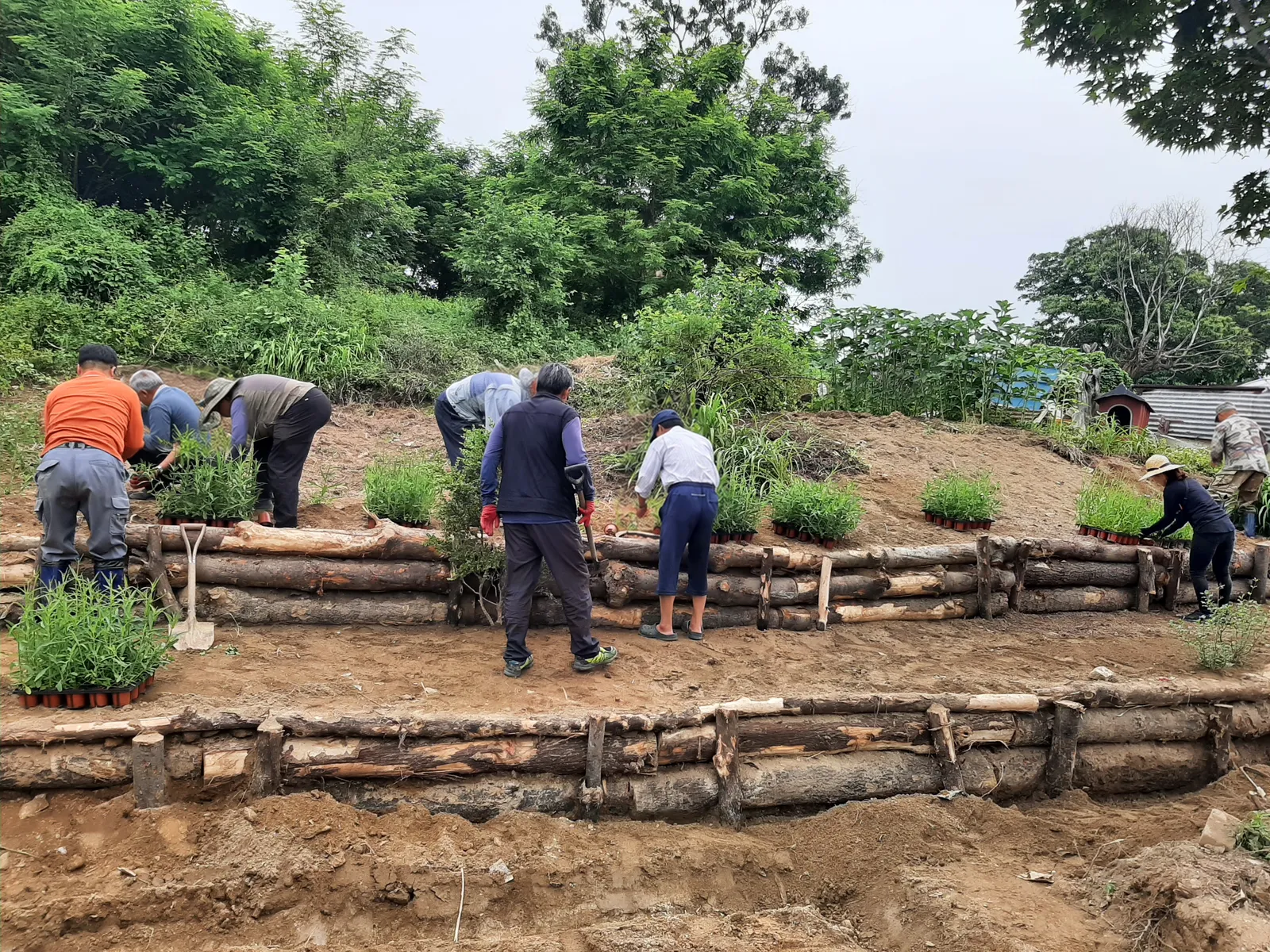
Rooftops, indoor spaces, artificial ground and slopes require attention to growing conditions and structural loads.
Monitor moisture and growth to support establishment and recovery of transplanted trees. Provide watering, nutrition, pest and disease management, and pruning according to plant condition.

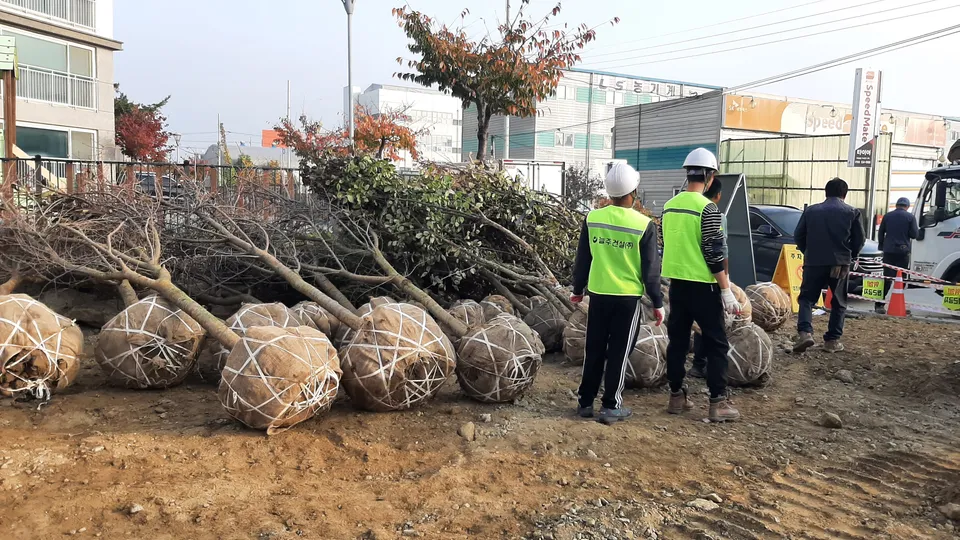
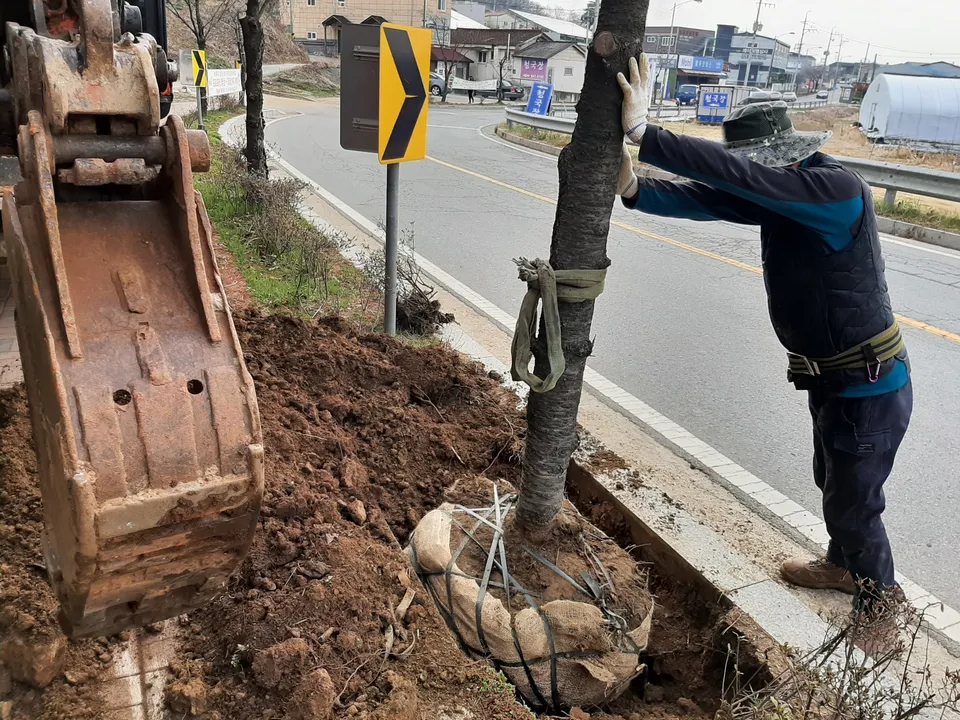
Review sunlight, wind, drainage and soil before deciding on improvements.

Check size, form and health against the planting design.
Prepare the planting area and depth for the root ball and ground conditions.

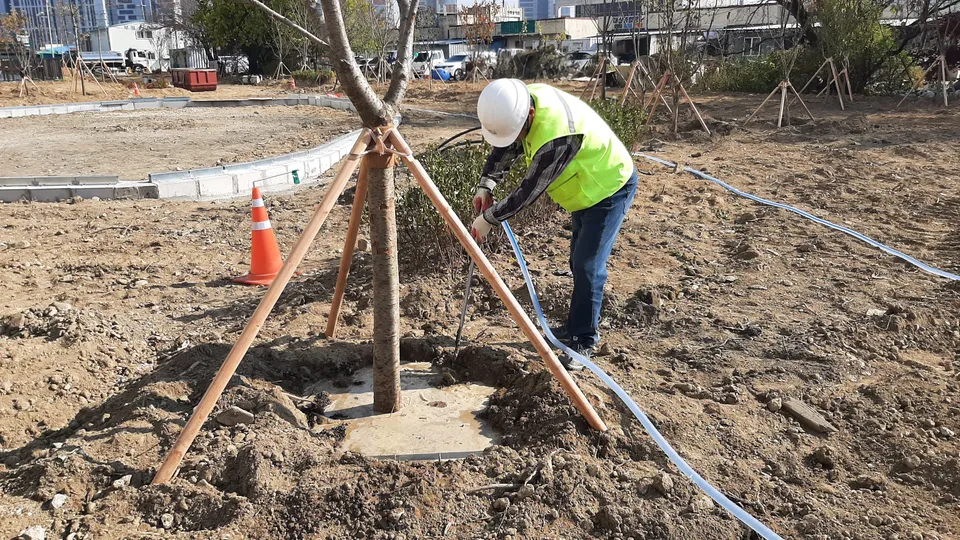
Supply water during planting and help the surrounding soil settle.
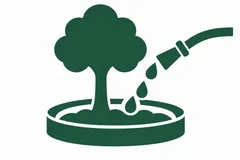
Choose suitable support to limit wind movement during establishment.
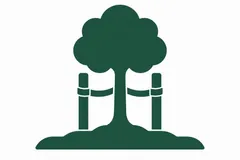
Use suitable mulch to manage moisture and weeds, then finish the surrounding area.

Choose species and planting distances for the height of the views to screen and the available boundary width. Consider the mature height and spread of species such as arborvitae, evergreen spindle and eastern white pine.
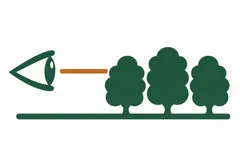
Choose species, planting density and spacing with room for pedestrians and growing trees. Assess the local adaptability of dawn redwood, eastern white pine and evergreen oak; noise reduction varies by site.
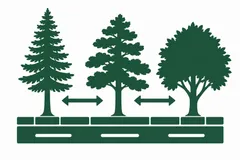
Pines, winged spindle, boxwood and nandina are examples to assess against soil depth, load and drought conditions.
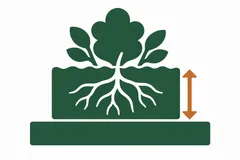
Set clearance distances and planting positions to allow room for mature branches and roots around walls and neighbouring boundaries. Provide access and maintenance routes for pruning and care.
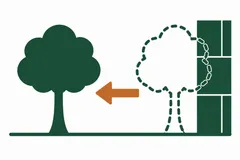
Check wall orientation and shade. Nandina, yew, hydrangea and boxwood also need assessment for local soil and climate.